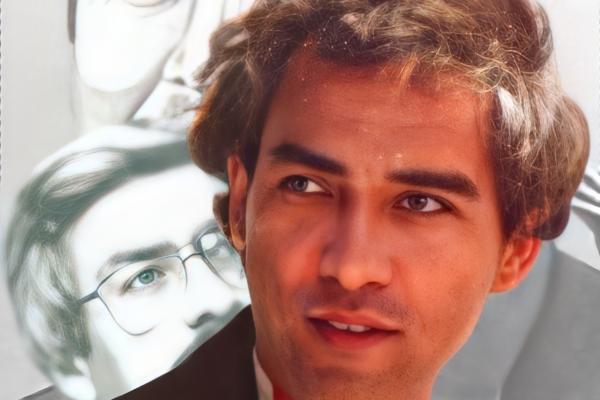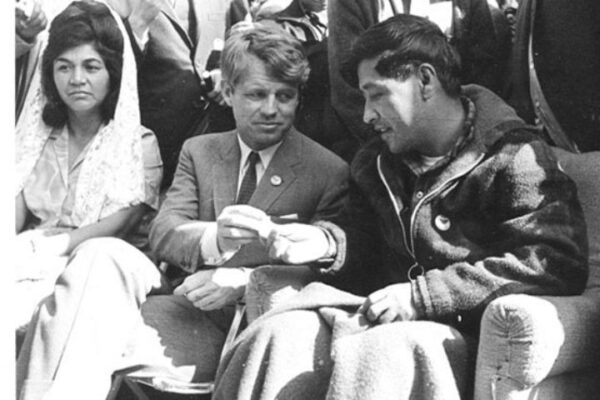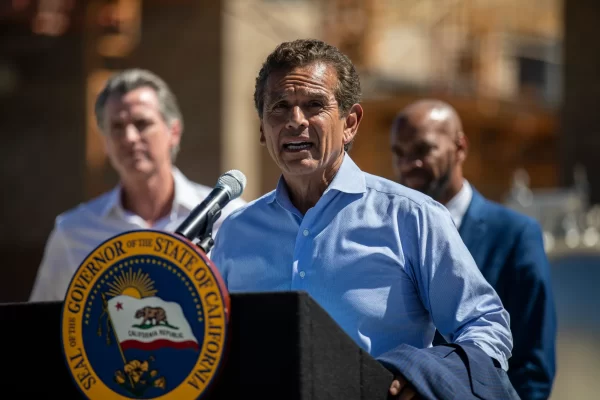
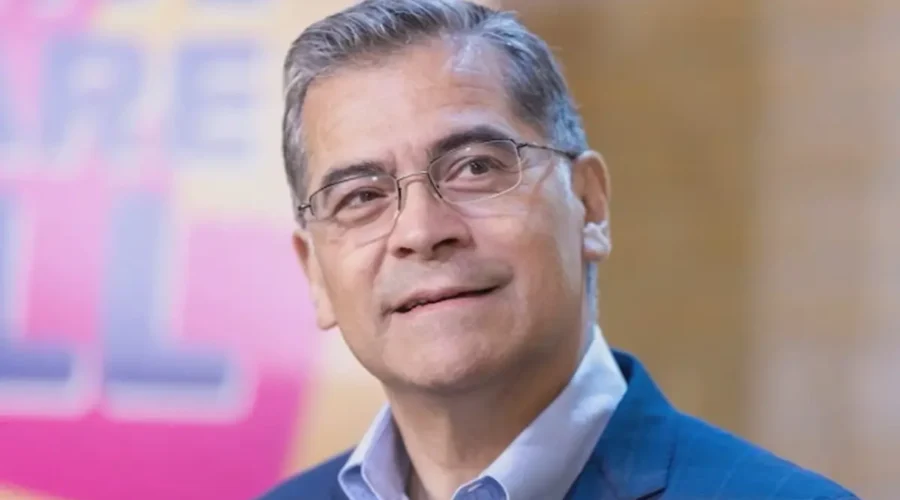
Xavier Becerra pulled off California’s most surprising political comeback to the brink of history as the Golden State’s first modern day Latino governor.
FOR MONTHS, XAVIER BECERRA seemed destined to become little more than a footnote in California’s 2026 governor’s race.
Ignored by much of the political establishment, overshadowed by wealthier and louder rivals, and even quietly encouraged by some Democrats to reconsider his candidacy, Becerra entered the year looking more like a respected elder statesman than a serious contender for the state’s highest office.
Today, he stands on the verge of history.

The former congressman, California attorney general, and U.S. Secretary of Health and Human Services has secured a place in November’s general election after finishing among the top two vote-getters in California’s primary, completing one of the most remarkable political comebacks in recent state history.
With millions of ballots still being counted, Becerra ultimately surged past Republican Steve Hilton, the former Fox News commentator who initially led in early returns. Hilton and billionaire Democrat Tom Steyer remained locked in a battle for the second spot as election officials continued tallying late-arriving ballots.
Under California’s nonpartisan primary system, the two highest vote-getters advance to November regardless of party affiliation.
For Becerra, the achievement represents far more than simply surviving a crowded primary. If elected in November, he would become California’s first Latino governor in the modern era, a milestone that reflects the dramatic demographic transformation of a state where Latinos now make up the largest share of the population.
“The people of the great state of California, in the greatest nation on earth, have spoken, loudly and proudly,” Becerra declared after his advancement became clear. “We will not be bought. We will not be bullied. And we are never backing down.”
At 68, Becerra’s victory stands in sharp contrast to the modern political formula. In an age dominated by viral moments, social media celebrity, and vast personal fortunes, he offered something almost old-fashioned: experience.
The son of working-class parents, Becerra built his career methodically, serving in Congress for more than two decades before becoming California’s attorney general and later joining President Joe Biden’s cabinet. His campaign emphasized competence, steady leadership, and working-class roots rather than ideological spectacle.
That message resonated with many voters who were confronted with a sprawling field of candidates and remained undecided until the final days of voting.
“It was a struggle for me to choose,” said Maravilla Hernandez-Perez, a 25-year-old Los Angeles resident studying to become a paralegal. Casting her ballot shortly before polls closed, she ultimately selected Becerra because she believed he had the strongest chance of prevailing.
Political analysts say Becerra also benefited from timing and circumstance.
The withdrawal of Congressman Eric Swalwell from the race amid allegations of sexual misconduct reshaped the Democratic field and created an opening for a candidate whose long résumé suddenly became an asset rather than a liability. Meanwhile, Democratic voters tended to cast ballots later than Republicans, helping explain why Hilton appeared strong in the initial returns before Becerra gained ground as additional votes were counted.
Fernando Guerra, a political scientist at Loyola Marymount University, said Becerra’s measured approach may have appealed to voters weary of political theatrics.
“He is deliberate, he’s experienced, and his personal style helped sustain interest in him as support grew,” Guerra said.
The race was hardly free of turbulence.
Becerra endured attacks from Steyer, whose campaign spent heavily on television and digital advertising. One line of attack focused on a corruption scandal involving two former Becerra aides who pleaded guilty to diverting campaign funds. Federal prosecutors characterized Becerra as a victim of the scheme rather than a participant, and no charges were brought against him.
Other advertisements attempted to portray him as too closely aligned with business interests after organizations including the California Chamber of Commerce spent tens of millions of dollars opposing Steyer and supporting candidates viewed as more moderate.
Yet those attacks failed to halt Becerra’s momentum.
Indeed, his rise may signal something larger about California politics. For years, observers have predicted that the state’s growing Latino population would eventually produce a Latino governor. Becerra’s success suggests that moment may finally be arriving.
The shape of the November campaign now depends on who joins him.
A matchup against Hilton would make Becerra the clear favorite. No Republican has won statewide office in California since 2006, and Hilton’s association with President Donald Trump could prove a difficult hurdle in a state that remains overwhelmingly Democratic.
A contest against Steyer would be considerably more complicated. The billionaire investor spent more than $200 million of his own fortune during the primary campaign, helping make the race the most expensive gubernatorial primary in American history. Few observers believe he would spend less in a general election.
For now, though, the story belongs to Becerra.
Just months ago, he appeared to be an afterthought in a race dominated by celebrity, wealth, and political drama. Today, he is the candidate everyone must reckon with, a reminder that in politics, experience sometimes still matters and that comebacks often arrive when nearly everyone has stopped looking for them.
TONY CASTRO, the former award-winning Los Angeles columnist and author, is a writer-at-large and the national political writer for LAMonthly.org. His forthcoming biography about Marilyn’s childhood and youth, THE GIRL WHO WOULD BE MARILYN MONROE, will be published in September by Bloomsbury. He can be reached at tony@tonycastro.com.