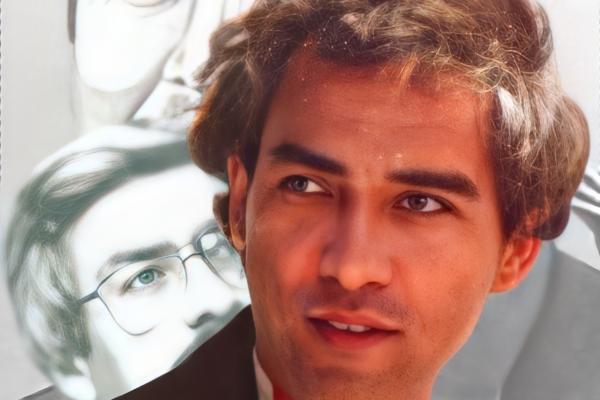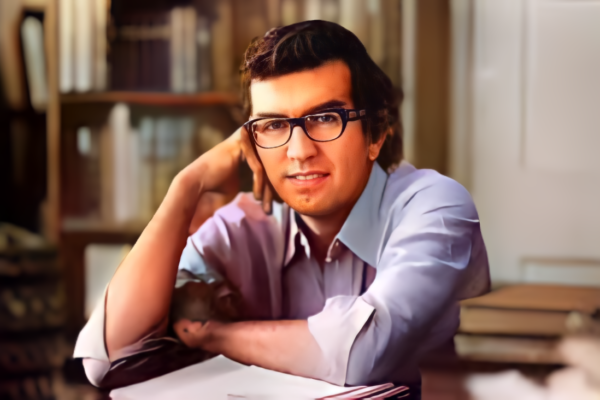
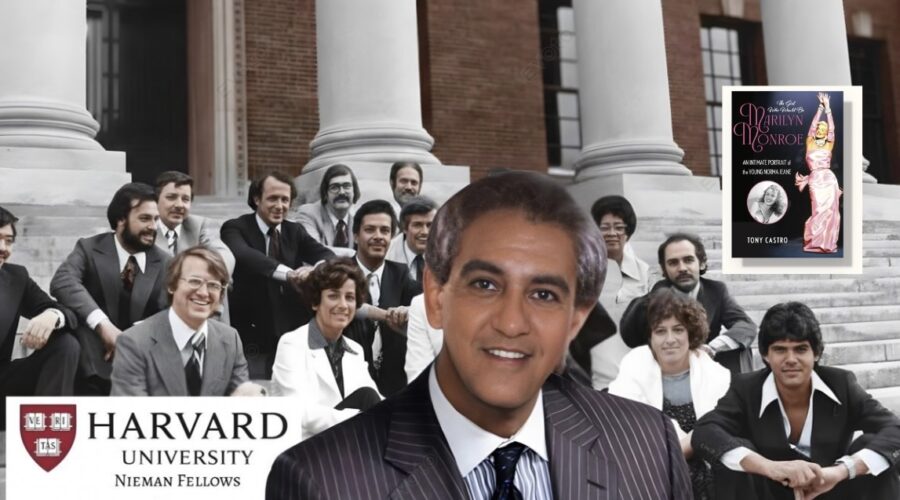
They once told a seven-year-old Mexican-American boy in Waco, Texas, that he was “mentally retarded” and would never learn very much. He grew up to become a critically acclaimed journalist, historian, and author searching through the hidden emotional histories of America.
I RECENTLY SPOKE AT AN inner-city high school where the dropout rate remains painfully high, few students go to college, and success is something many kids stop imagining for themselves long before graduation.
At the end of the talk, I asked if anyone had questions.
One boy raised his hand and shrugged.
“I can’t really relate to this,” he said. “Everybody would like to be Tony Castro.”
Without thinking, I answered:
“So would I.”
The room laughed.
But I wasn’t joking.
Because the man those students were listening to that afternoon, the writer, the author, the former Nieman Fellow at Harvard, the journalist who had interviewed famous people and written books that found readers across the country, was not the man he started out as.
Not even close.

I was born in Waco, Texas, in 1946, the son of a working-class Mexican-American family. An ordinary kid with an ordinary childhood until one day my parents were called into my elementary school and told something that would change my life forever.
I was seven years old.
The principal informed my parents that I was mentally retarded.
She explained that I had a low IQ and probably would never learn very much. She recommended placing me into special education classes.
Fortunately, one young student teacher quietly disagreed.
She suspected the problem wasn’t intelligence at all. The problem was language. Spanish was spoken at home. I barely understood English.
The school superintendent dismissed the idea, but the student teacher convinced my parents to have me privately tested by language specialists.
Within weeks, everything changed.
Once the language barrier disappeared, I began thriving almost immediately.
But something inside me had already shifted permanently.
Even as a child, I understood how close the world had
come to defining my entire future incorrectly.
And after that, I never fully trusted institutions again.
I stopped believing that teachers, principals, experts, or authority figures necessarily understood who people truly were or what they might become. In some ways, I emotionally left school that year even while continuing to attend it.
What I carried afterward was not confidence.
v
It was ambition.
At fourteen, I lied about my age to get a reporting job at a weekly newspaper whose editors believed they were hiring a high school senior. By the time I actually became a senior, I was already working professionally as a full-time reporter on my hometown daily newspaper.
That became my real education:
Writing,
Rewriting,
Researching,
Asking questions,
Watching people,
Learning how the world actually worked.
Over the years, journalism carried me far beyond anything that frightened little boy in Waco could have imagined. Scholarships. Harvard. Big-city newsrooms. Television studios. Books about Hemingway, Mickey Mantle, civil rights, Marilyn Monroe, and the Kennedys. I worked alongside legendary editors and famous writers. Some readers even fell in love with my books.
From the outside, it probably looked like certainty.
But the truth is, much of my life has been spent searching.
Searching for identity.
Searching for peace.
Searching for the person I was supposed to become after surviving the boy everybody once misunderstood.
And maybe that’s why I answered that student the way I did.
“So would I.”
Because success is not becoming somebody else.
It is surviving long enough to keep becoming yourself.
TONY CASTRO, the former award-winning Los Angeles columnist and author, is a writer-at-large and the national political writer for LAMonthly.org. His forthcoming biography about Marilyn’s childhood and youth, THE GIRL WHO WOULD BE MARILYN MONROE, will be published in September by Bloomsbury. He can be reached at tony@tonycastro.com.