

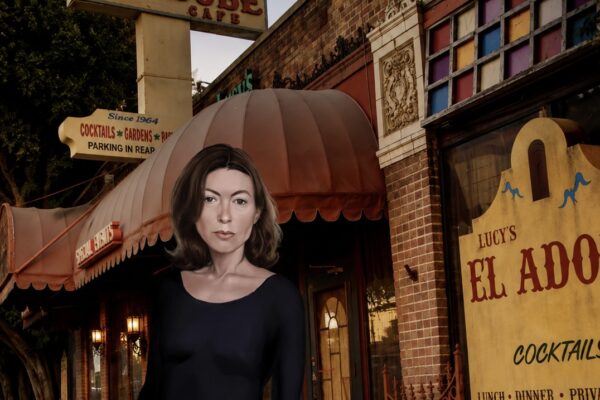
Resurrecting Lucy’s El Adobe Café, a beloved Hollywood landmark facing a hopeful revival, restaurateur heiress Patricia Casado fought to restore her father Frank’s legacy. After years of decline, closure, and a bitter inheritance battle, she leaves a lasting memory of nostalgia and resilience to a part of L.A.’s cherished past.
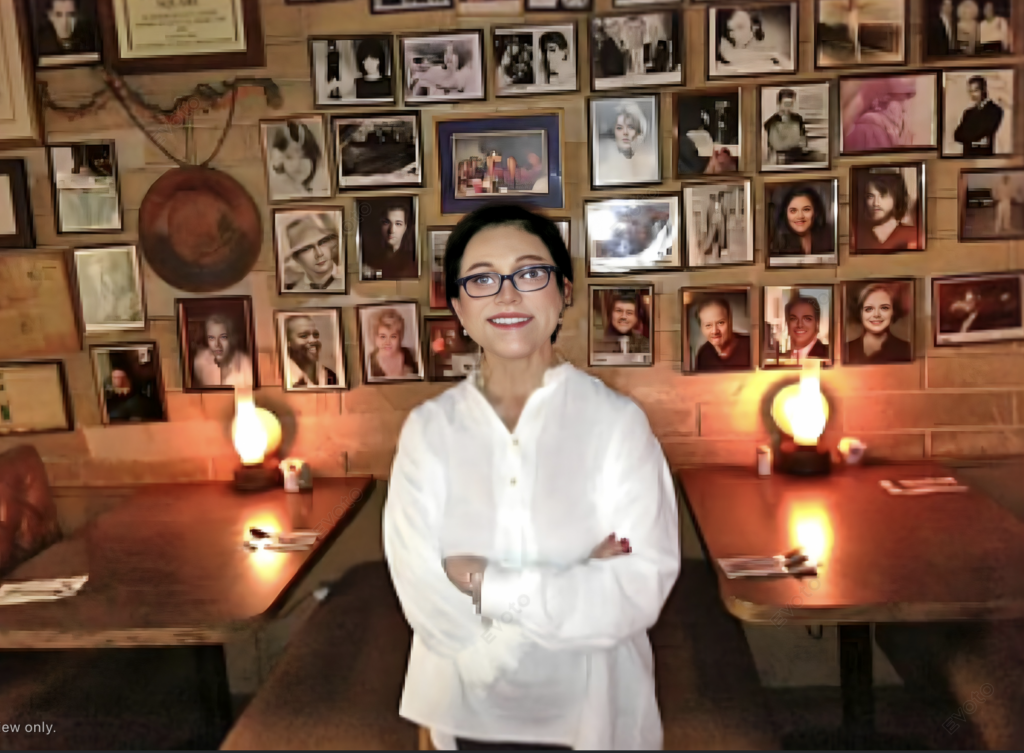
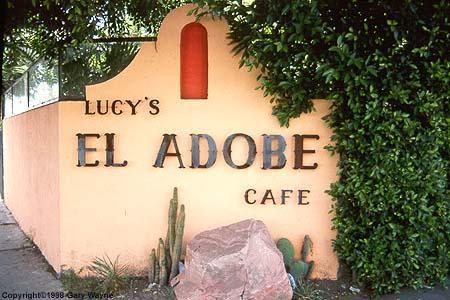
Patricia Casado was the heartthrob of Lucy’s El Adobe Café, the once famous Hollywood Mexican restaurant that became a pop cultural hub as second home to Governor Jerry Brown, the Eagles, Linda Ronstadt and countless others needing a retreat or respite from life in the fast lane of Los Angeles when tequila alone wasn’t enough.
Tucked across the street from Paramount Studios, Lucy’s was where Hollywood and heart collided over enchiladas and margaritas. It was the kind of place where movie deals were whispered, political futures were mapped out, and dreams felt tangible.
It was also the kind of place where I found myself, not long after moving to LA, sipping margaritas with Frank Casado, the owner and patriarch of the legendary establishment. Frank was a bear of a man with a booming laugh and a disarming way of looking straight into your soul. That night, after hours, when the restaurant was quiet and bathed in the soft glow of its iconic neon sign, Frank asked me a question I’ll never forget.

“So,” he said, leaning back in his chair, his glass of tequila catching the light, “what are your intentions with my daughter, Patty?”
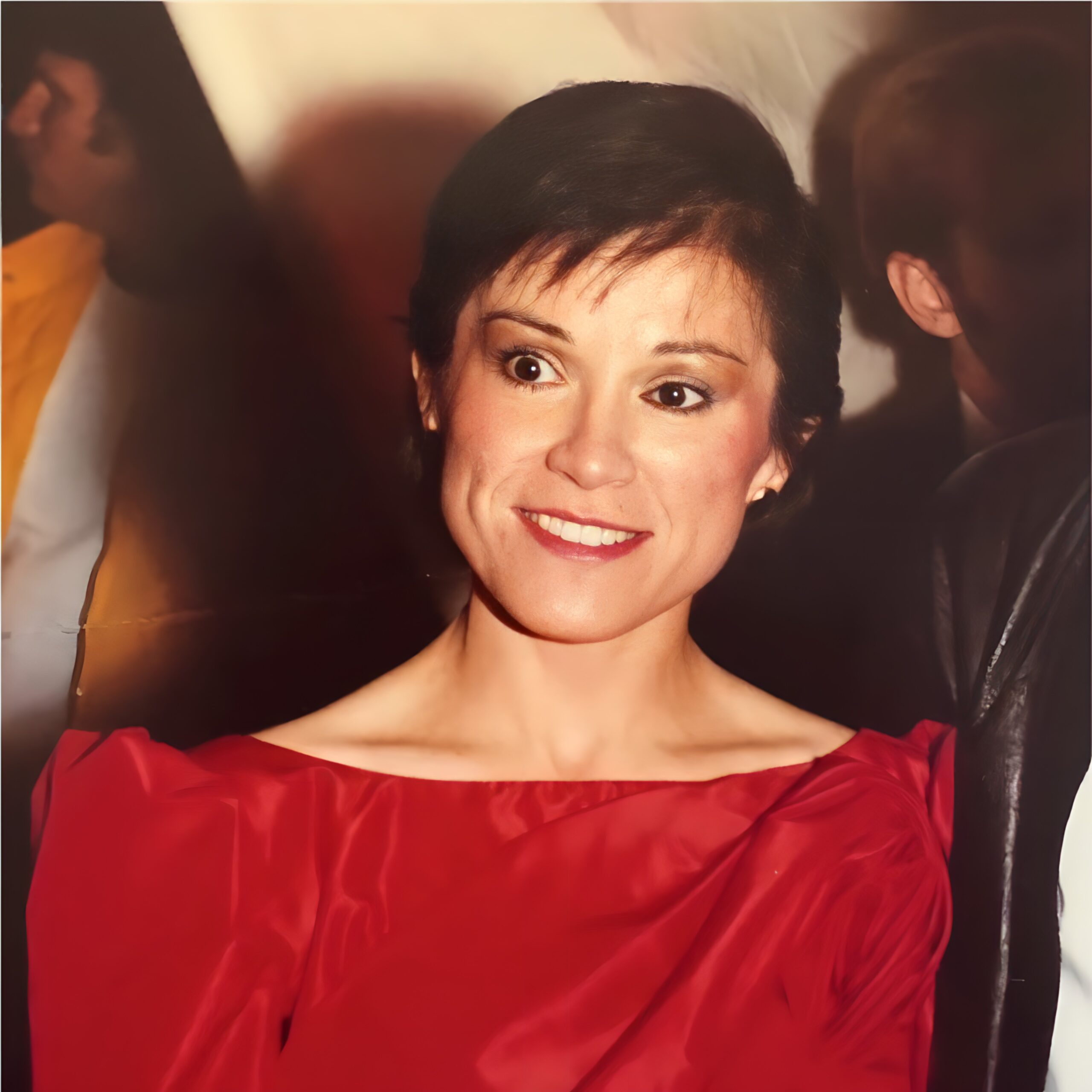
Patty Casado, Frank’s only daughter, was as much a part of Lucy’s as the walls themselves. She was beautiful, whip-smart, and had a laugh that could make even the most hardened Hollywood type forget their woes. We often flirted, exchanging playful banter as she worked tirelessly to keep the restaurant humming. But it was innocent—mostly.
“Frank,” I said, taking a long sip to buy time, “it’s just flirtation. Pure and simple. I’m newly divorced and have no interest in anything serious. And I don’t think Patty does, either.”

Frank studied me for a moment. “Good,” he finally said, his smile returning. “She’s special, you know. My pride and joy.”
He wasn’t exaggerating. Patty was the beating heart of Lucy’s. That reality hits home, especially hard now that she is gone.
Patricia Casado, the last of the Casado family that became synonymous with their restaurant Lucy’s El Adobe Café in Hollywood, passed away February 7. She was 75.
Patty had been hospitalized for much of the new year at Cedars Sinai Medical Center, where she died from complications of a heart condition, surrounded by loving friends.
“This is such unexpected terrible news. They are all gone,” said Christiaan Webb, whose father, music legend Jimmy Webb, gave the restaurant its gorgeous ebony grand piano that he would sometimes play. “Eternally grateful.”
She had hoped to reopen her restaurant later this year.
Now she is being mourned and remembered for her friendship and the love of her family’s business which she knew inside and out, from mixing the perfect margarita to managing the eclectic mix of customers who walked through its doors—stars, locals, and tourists alike. She was the keeper of its soul. Like many of her friends, I’ve spent the last few days drowned in reminiscences.
The first time I ever spent any real time with Patty was 1978 during the gubernatorial campaign. Frank invited me to a fundraiser for Jerry Brown at their home on a Sunday afternoon. At some point, Patty grabbed my hand, led me outside, and we piled into a car that had Jerry in the passenger seat and a campaign driver who may have been Llew Werner. Patty was practically on my lap in the backseat with her friend Alice Marshall crammed in on my left and two other campaign people on the other side.
And the driver peeled off, eventually making a left on La Brea and speeding several times the legal limit toward LAX. We must’ve made it an under 10 minutes, in a crazy ride that ended with the driver pulling into some side airfield so that Jerry could catch a plane. All the while Patty was whispering, “You can’t write about this. You can’t write about this.” So this is the first time I’ve written about that….
So much craziness…. in 1983. I came back from a six-month reporting assignment in El Salvador with a mild case of post-traumatic stress. l quickly fell in love with a New York novelist who happened to be in L.A. for a few days, and we weren’t thinking straight.
Patty came over to my place early one night when my friend was off having a drink with pals, and suddenly I found myself in Patty’s arms. I caught myself and asked her what in the world we were doing. She says, “You’re crazier than I thought you were if you marry this girl, and if I have to sleep with you to stop it, I will.”
Nothing like that happened. But I didn’t marry the novelist just the same.
About a year later, I get a call from Patty just after I’ve gotten home from the office one day. Her first words were, “Do you have a tux?” Yeah, somewhere here. “Good, put it on. We’re coming to get you.” She had several tickets to the taping of the Motown 25 Anniversary show, and one of the men she invited had backed out. Or maybe he didn’t have a tux. I don’t know.
A few minutes later a limo pulls up in front of my building. Patty’s in there with her longtime boyfriend, writer-comedian Doug Steckler, along with another couple I didn’t know and also her girlfriend Marie Moretti whose date had canceled, and I was the pinch-hitter. Moretti is drop dead gorgeous and shier than I. So I don’t know if we said more than a couple of words to each each other during the marathon taping for the TV show in which Michael Jackson first did his famous Moonwalk. We did have a fabulous view of it. That was routine for Patty. She was always great about getting the best tickets in the world.
But that part of the taping didn’t take place until well after midnight, by which time all our stomachs were growling and they weren’t serving dinner at the convention center in Pasadena until after they finished taping. I think we finally ate at 3 AM the next morning and wound up with the old Michael Jackson or at least the old Michael Jackson face sitting at our table. So, yeah, never a dull moment. Patty was a walking bestseller that unfortunately was never written.
And, oh, how Frank loved her. The evening when he had asked me of my intentions toward his daughter became a tequila-soaked long night of reminiscences, mostly about Patty. At one point Frank was in tears recalling when he had almost lost her.
“She was so beautiful,” he said. “I know you see her now and you see a lovely woman, but I’m telling you she was as beautiful as any woman in this town who ever walked into this restaurant…”
Frank began telling me the story of a few years earlier when Pattyhad been suffering from debilitating headaches that were initially mistaken for migraines.
Eventually, a series of tests diagnosed something much more serious: Facial Nerve Neuroma. Frank had committed the term to memory. Facial nerve schwannomas, medningiomas or brain gliomas, which cause symptoms like gradual or recurring facial paralysis, spasms, pain, and numbness. These benign or malignant growths often affect the facial nerve brainstem, leading to weakness or twitching.
They called it a benign growth—a “schwannoma”—as if a harmless name could soften the blow. To the surgeons who removed it, it was a delicate extraction of a silent invader coiled around her cranial nerves. To Patty, the surgery was a thief. It traded her symmetry for a cure. Where once a single smile could light a room, she was left with a face divided: one side remained a masterpiece of her former self, while the other fell into a heavy, frozen silence that no amount of light could reach.” Patty recovered. She would lead a full life.
“She was so beautiful,” I remember Frank sobbing over and over, uncontrollably. “
“Frank, she is still beautiful,” I kept insisting. “She’s gorgeous.”
It turned out to be a night no amount of tequila could heal.
And Frank passed away too soon, over 30 years ago now, leaving behind not just his family but a cultural institution. Lucy’s was more than a restaurant; it was a gathering place, a landmark, a little slice of history served with chips and salsa.

When Frank’s wife, Lucy, took over, Patty continued to pour herself into the restaurant. She was the natural heir to her father’s legacy, the one who understood his vision and could keep it alive. But when Lucy passed away not quite a decade ago, everything unraveled.
To the shock of everyone, Lucy left the restaurant and estate not to Patty, but to her oldest son. It was a disastrous decision that defied logic, and one that would set off a chain of events leading to the heartbreaking state of affairs we see today.
Patty’s brother, though well-meaning, wasn’t Frank or Patty. Under his care—or lack thereof—the restaurant’s magic began to fade. He was also such an idiot that he let Lucy’s health insurance premiums lapse. Long before the pandemic delivered its death blow, Lucy’s was already about to bite the dust.

And then, the pandemic came. Lucy’s El Adobe Café, once bustling with life, shuttered its doors for good. Homeless encampments took over the property. Taggers left their mark on its walls, turning what had been a cherished Tinseltown landmark into an eyesore that would make even the most hardened Angeleno weep.
Resurrecting Lucy’s El Adobe Café seemed an impossible idea.
But Patty fought. A legal battle ensued over the estate, a bitter war between siblings that played out in courtrooms instead of the dining room where Frank’s laughter had once echoed. It seemed like an impossible fight. And then, three years ago, her brother died suddenly. God was looking out. Right now there’s too much pressure.
With her brother gone, Patty finally won control of the estate and the restaurant. But what she inherited was a shadow of its former self: a building in disrepair, covered in graffiti, surrounded by heartbreak.
Most people would have walked away. Sold the property. Cashed in on the millions of dollars it was worth and moved on. But Patty wasn’t most people.
She was Frank’s daughter.
And so, Patty did the unthinkable. She tried to resurrect Lucy’s El Adobe Café, facing a mountain of challenges that would make even the most seasoned restaurateur throw in the towel. The homeless encampments, the vandalism, the decay—all of it had to be addressed before she could even think about opening the doors again.
It was a labor of love, a testament to her father’s legacy and the bond they shared. Frank would have been 100% behind her, sitting at a table with a margarita in hand, cheering her on.
Today, Lucy’s may be shuttered, but its spirit lingers. You can feel it when you pass by the old building, its neon sign dark but still evocative. You can imagine the laughter, the clinking glasses, the whispers of Hollywood secrets.
And you could see it in Patty, who refused to let her father’s dream die. She wasn’t just trying to rebuild a restaurant; she was honoring a memory, trying to preserve a piece of history, and fighting for something that mattered.
It wasn’t going to be easy. The challenges she faced were enormous. But if anyone could have pulled it off, it would have been Patty. She was her father’s daughter, after all.
Maybe it’s time for those of us who loved Lucy’s—and there are many of us—to step up. To lend a hand in her memory, to support Patty in her fight to bring this beloved institution back to life in her honor.
Because Lucy’s wasn’t just a place to eat; it was a place to belong. A place where a newcomer to LA could sit down with Frank Casado, share a drink, and feel like family.
And in a city that often feels transient and impersonal, places like Lucy’s are rare. They matter.
That night, all those years ago, when Frank asked me about my intentions toward Patty, he wasn’t just being protective. He was reminding me that family—and the places that bring us together—are sacred.
Frank, wherever you are, I hope you’re watching. Your daughter fought for your legacy with everything she had. And if we’re lucky, one day soon, Lucy’s El Adobe Café will rise again.
I’ll be there on opening night, raising a margarita to you, to Patty, and to the restaurant that brought us all together.
TONY CASTRO, the former award-winning Los Angeles columnist and author, is a writer-at-large and the national political writer for LAMonthly.org. His latest book is MICKEY & BILLY. He can be reached at tony@tonycastro.com.


21 thoughts on “The Sad, Sudden Passing of Lucy’s El Adobe Café Heiress Patty Casado”
Comments are closed.